

Liz Goodman opens witching bottle
The opening of the witching bottle

Museum in Docklands shows bottle this Halloween

31 October 2006

As minds turn to black cats and curses this Halloween, a modern-day witch bottle, found on the Thames foreshore is going on display for the first time at Museum in Docklands today.

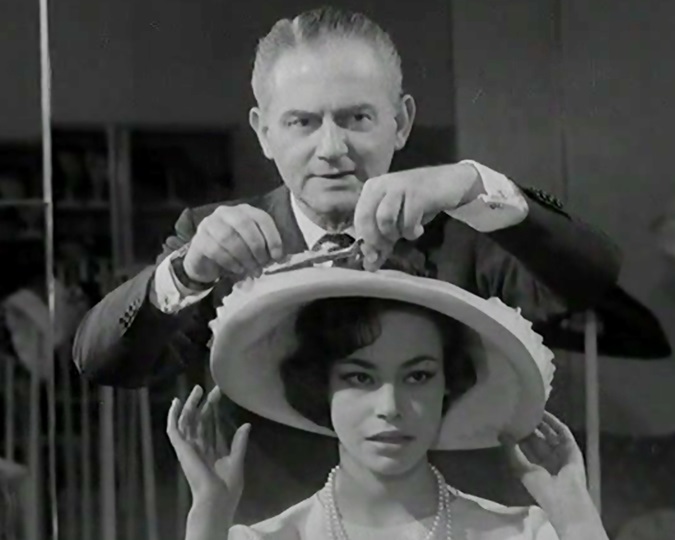
The bottle is part of a display exploring the long history of ritual and superstition in London. It has held its secrets, sealed, for nearly twenty years, before being opened by specialists at the Museum’s Archaeological Archive this Halloween.

Containing coins (a halfpenny and a dime), teeth, a metal fragment wrapped in a piece of paper, a small piece of carrier bag, and a phial of liquid - probably oil of clove, the plastic bottle is a modern version of the witch bottles which were common between 1500 and 1700.

With the fear of witches endemic in this period, wine jars were often re-used as charms against witchcraft. Sealed inside were bent pins and nails, human hair, nail clippings and even urine. Bottles were then thrown in the river or buried.

They were believed to cause the witch terrible pain until she lifted her spell.  The meaning of the modern day bottle is a mystery. Could it be an offering to stop a toothache? A good luck charm? A curse?

Also on display for the first time is a 17th century Bellarmine jar, excavated in Rotherhithe, typical of the wine jugs commonly reused to ward off evil spirits.  A Roman curse tablet is also being exhibited.  In Roman times people scratched curses in Latin on lead tablets and offered them to the gods at temples.

This one reads: ‘I give Diana my headgear and scarf less one third. If anyone has done this, I give him, and through me let him be unable to live’. It’s a curse against a thief who stole someone’s clothes, and was found in a drain in London’s amphitheatre.

Modern witching bottl;e

Hedley Swain, head of Early London History, says "London has always been a city of many beliefs, both orthodox and less conventional. These artefacts wonderfully illustrate how when you scratch the surface of Halloween and trick-or-treat there are superstitions that go back many hundreds of years".

Roy Stephenson, manager of the Museum’s Archaeological Archive, who oversaw the opening of the modern-day witch bottle, says 'Ritual and superstition has been with Londoners since before Roman times and is still a major pre-occupation of modern Londoners, and we can only guess at the reasons for peoples curious rituals in the past.'

Ritual and Superstition runs at Museum in Docklands from 31 October.

Museum in Docklands
West India Quay
London E14 4AL
Tube: West India Quay
Admission to the Museum  £5 adult, concs £3 (over 60s, unwaged), with free re-entry for a year.
Kids go free.

For further information and full range of images, please contact Tim Morley:

tel: 020 7814 5607
email: tmorley@museumindocklands.org.uk

Notes to editors

  1. Museum in Docklands is housed in a converted Georgian warehouse on West India Quay, next to Canary Wharf. Its displays explore London's connections with the rest of the world through the 2000 year history of the river, port and its people.

    Across four floors of interactive displays the Museum’s unique collection takes you on a journey through stories of the Thames and surrounding areas from Roman settlement to 21st century urban regeneration.

    A changing programme of activities caters for visitors of all ages and includes gallery tours, storytelling, drama, talks by history experts, films and guided walks through Docklands. The Museum opened in 2003 and is a short walk along West India Quay from the Docklands Light Railway station or Canary Wharf Jubilee Line tube station. For more information go to www.museumindocklands.org.uk or call 0870 444 3857.
  2. The Roman curse tablet was found in the fill of a drain (AD 160-250) within the arena at the London amphitheatre during excavations in 1993.

    It is the first tablet found in Britain to refer to the Goddess Diana.  Significantly it was found near Goldsmiths’ Hall, itself the find spot of an altar to Diana in 1830.  It was not deliberately folded over after being inscribed, but has become crumpled, with ragged edges and damage due to creasing and corrosion, including the hole in the centre, which has erased part of the curse.
  3. The Bellarmine or Bartmann (“face- bottle”) jar, belonged to one Pieter Van Anken, and was found in Platform Wharf in Rotherhithe in 1986.

    It has not been on public display before. The anchor motif is a pun on his name.  This is typical of the kind of jar that would be reused as a charm or witch bottle, filled with various objects and buried in the hope of warding off the evil and the curses of witches. The face insignia would also have been hoped to have a deterring effect.

    Fear of witches led to 200,000 people in Europe being burnt at the stake, between 1500 and 1700.  Between 1542 and 1684, 1000 unlucky souls were executed as witches in England.
  4. The modern day witch bottle, found on the foreshore in 1988 contains, coins (a halfpenny and a dime), teeth, a metal fragment wrapped in a piece of paper, a small piece of carrier bag, and a phial of liquid – probably oil of clove.  The bottle held its secrets, until this Halloween when it was opened by archaeologists at the Museum Archaeological Archive this.