Britain took a leading part in the slave trade from the 16th century until slavery was finally abolished in 1833. Millions of Africans were taken to the Caribbean against their will to work on British-owned plantations.
Some were brought to London and were amongst those who campaigned to end slavery. By the 19th century some had married White partners and assimilated into the general population.
After World War II, labour shortages in Britain led employers to recruit workers in the West Indies. The first Caribbeans arrived on board the ship the ‘Empire Windrush’ to fill these posts. They settled in Notting Hill and Brixton and were faced with prejudice from landlords and the police.
Many Caribbean Londoners now also live in Peckham and New Cross in south London and Bow to the east.
London is the place for me, London that lovely city. You can go to France or America, India, Asia or Africa. But you must come back, to London city.Aldwyn ‘Lord Kitchener’ Roberts, calypsonian who arrived in London aboard the ‘Empire Windrush’, 'London is the place for me' 1948
|
Africans were brought to London from the Caribbean from the 1570s as a result of Britain's role in the slave trade. Ships left ports like London filled with goods for the west coast of Africa.
Here, the goods were traded for enslaved people whom the ships then carried to the West Indies to work on sugar and tobacco plantations.
The final leg of the voyage transported sugar, tobacco and cotton from the plantations back to Britain. This made enormous profits for British manufacturers, slave traders and plantation owners.
An infrastructure of banks and insurance agencies grew up around the slave trade, some of which still exist, like Barclays bank.
Olaudah Equiano and Ottobah Cugoano were sold as slaves but escaped to live freely in Britain. They wrote about the inhuman system of slavery in the colonies and struggled to ban it. In 1807 the British outlawed trading in enslaved people and in 1833 abolished slavery throughout the British Empire.
The British government awarded compensation to West Indian plantation owners for the loss of their slaves. Many of those freed from enslavement remained on the plantations, where they continued to be economically exploited.
After slavery was abolished, fewer Black people came to London and Blacks, mostly male, began to marry into the White population.
A number of Caribbean people made the headlines in 19th century London. William Davidson, a Jamaican-born cabinet maker, was executed for his part in a plot to overthrow the government in the wake of the Peterloo Massacre. Mary Seacole, also from Jamaica, nursed British troops in the Crimea, rivalling Florence Nightingale’s achievements.
During the 20th century, John Archer pioneered African and Caribbean involvement in local politics when he became Mayor of Battersea in 1913. In 1931 Dr Harold Moody founded the League of Coloured Peoples, the first Black pressure group.
George Padmore and C. L. R. James, from Trinidad and Jamaica respectively, were central figures in the fight for African independence. The Jamaican pan-Africanist Marcus Garvey also ended his days in London.
Over 15,000 Caribbean soldiers fought in the British West Indies Regiment in World War I. Double this number served during World War II, while many others carried out essential work in Britain.
Like the rest of Britain, London experienced a labour shortage during the years of postwar reconstruction. The National Health Service and London Transport both recruited in the West Indies.
The 1948 British Nationality Act gave British citizenship to all people living in Commonwealth countries, and full rights of entry and settlement in Britain. The first to respond was a group of 500 Jamaicans who arrived in London on board the ship the ‘Empire Windrush’.
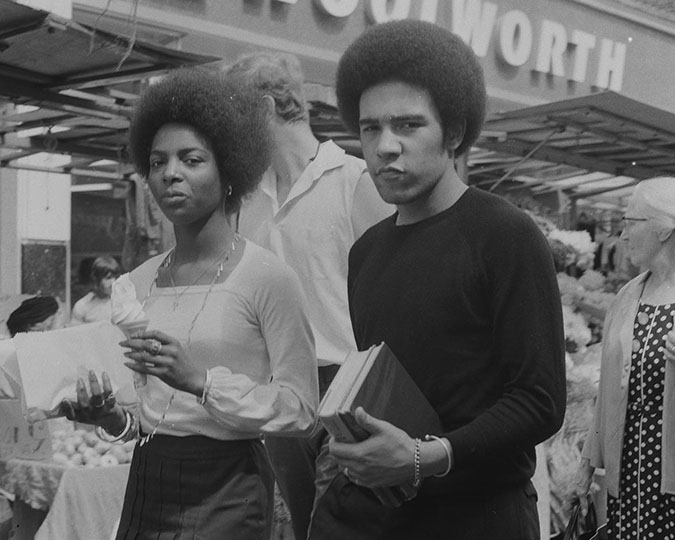
They settled in various areas of the city, particularly Brixton, which continues to be a centre for the Caribbean community. Stalls at Brixton Market offer a wide selection of Caribbean food and goods.
Notting Hill became home to people from Trinidad and Barbados. The postwar housing shortage, coupled with racial prejudice, meant that these migrants found it difficult to rent accommodation.
In 1958, attacks in the area by White youths marred relations with West Indian residents. The annual Notting Hill Carnival was initiated in the 1960s as a positive response by the Caribbean community. It is now Europe’s largest outdoor festival.
During the 1960s, media coverage of the US Civil Rights Movement created a new Black consciousness worldwide, encompassing West Indian Londoners.
The 1970s was a period when young people of Caribbean descent had to come to terms with their double cultural identity. They often faced prejudice and hostility from the authorities.‘Sus’ laws allowed the police to stop and search large numbers of young West Indians, and were greatly resented.
Violent riots broke out in Brixton in 1981 and 1985 as West Indian men demonstrated their anger against maltreatment by the police. The early 1980s were also a time of unemployment which disproportionately affected the Black population.
The Greater London Council (GLC), established in 1965, gave recognition to Black and minority ethnic communities within the capital and funded disadvantaged members of these groups.
Diane Abbott and Bernie Grant were among the first people of West Indian origin to become politicians in postwar London.
Around 344,000 Londoners identified themselves as ‘Black or Black British: Caribbean’ in the last census. There is now a Caribbean population in Bow, while Jamaicans have settled in New Cross, Peckham and on the Old Kent Road.
Harlesden and Willesden in North London are also home to a large Caribbean population. Harlesden is a centre for the reggae industry, as evidenced by the record shops and clubs based in the area.
Well-known Londoners of Caribbean origin include Trevor Phillips, journalist and head of the Commission For Racial Equality, poet and musician Linton Kwesi-Johnson and novelists Zadie Smith and Andrea Levy whose writing explores the experience of living in multicultural London.
Bibliography
Links