

Skip to search form

Related subjects:

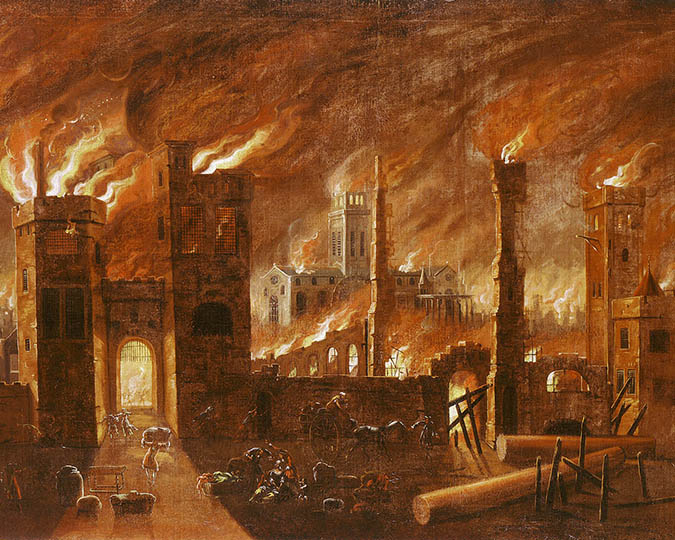
Copenhagen fire, 1728


The Copenhagen fire of 1728 was the largest in the city’s history. It lasted from 20 to 23 October and destroyed 28% of the city (1660 houses), making 20% of the population homeless (about 15,000 people). The rebuilding took nine years. This fire, and a later one in 1795, is the reason why there is little of the medieval city surviving today. 

The fire apparently started when a seven-year-old boy knocked over a candle. The story is remarkably similar to London’s - Copenhagen’s streets in the area of the fire were too narrow to accommodate fire pumps. This and other factors, such as a strong wind, led to the fire spreading across the city. After abortive attempts to halt the fire using cannons and gunpowder to blow up houses, the wind died down and the fire became more manageable. The number of dead is unknown, though it is likely to have been many more than in the Great Fire of London.

The Museum of London Group is funded by the City of London and the Greater London Authority. Museum of London, London Wall, LONDON EC2Y 5HN, United Kingdom. Copyright Museum of London. Legal notices & Disclaimer. This site is maintained by the Museum Systems Team.