Skip to search form

Related subjects:

Art Deco Style

Art Deco was an eclectic decorative arts style that developed in Europe in the first half of the 20th century. It cannot be rigidly defined as a movement of the 1920s and 30s. Characteristics of the style manifested themselves in a range of decorative arts and architecture from as early as 1910, and spread across the Western world until the 1940s. Practitioners of the Art Deco style did not work as a coherent group. The style evolved out of a cross-fertilisation of ideas between artists, architects and designers.

The Exposition Internationale des Arts Décoratifs et Industriels Modernes was held in Paris in 1925. Architecture and interior design, fashion and jewellery, furnishings and textiles, ceramics and glass, all came together to celebrate a vision of modernity that French designers had been experimenting with and refining for some years. It was here that the Art Deco style made its first large-scale public appearance, drawing an international audience of over 16 million.

At the time, the new style was referred to as ‘art moderne’, ‘jazz moderne’ or simply ‘modernistic’. The term ‘Art Deco’ was adopted in the mid-1960s when the style was re-evaluated. It was not until 1968 that Bevis Hillier published the first book of that title. The fact that the name ‘Art Deco’ was drawn from the title ‘Exposition Internationale des Arts Décoratifs et Industriels Modernes’, highlights the significance attributed to the event in launching the style. By the 1970s, the term was widely accepted to refer to a mix of styles from the 1920s and 30s. The debate continues on the exact definition of Art Deco, and the extent of the movement it encompassed. Although its meaning is continually evolving, it is possible to define the style in terms of the sources from which it drew influence, the areas of art and design it influenced, and the characteristic for which it is known.

The Art Deco style drew inspiration from a range of sources. From design, elements were appropriated from the Art Nouveau movement, high fashion, and the Bauhaus. It employed the abstraction, distortion and simplification of avant-garde art movements such as Cubism, Russian Constructivism and Italian Futurism. The vitality of the Ballets Russes, American developments in industrial design and architecture, the impact of the machine, and even the principals of aerodynamics all made their mark on the Art Deco style.

Influences, however, were not all contemporary. The discovery in 1922 of the treasures of Tutankhamun stimulated a fascination in Ancient Egypt, which, along with growing interest in the Orient, tribal Africa and the Mayan and Aztec cultures, filtered into the characteristic of the style. The resulting amalgam of influences is therefore highly complex.

The range of material affected by the Art Deco style was as eclectic and far-reaching as the influences that shaped it. Interior and product design, textiles, furniture, and jewellery were not the only examples. Fine art, sculpture, photography, film and architecture also used, and in turn furthered, the remit of the style.

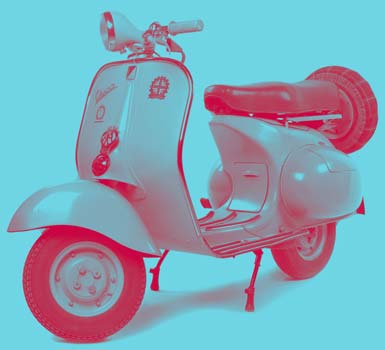
Art Deco is widely considered to be an elegant style of cool sophistication; a fitting backdrop to the luxurious, stylish lives of the wealthy. It conjures images of exotic materials, ocean liners, jazz and big band music, cocktail bars, skyscrapers, aeroplanes and sleek cars. This image, popularised then and now by Hollywood movies, is glamorous, dramatic and optimistic. However, there was a popular ‘mass-produced’ side to Art Deco, made available to a growing middle class through everyday objects such as Bakelite radios, tableware and vanity compacts. Via posters and adverts, ladies’ fashion, Underground stations, shops and cinemas, the style also permeated the streets of London to reach the lives of almost everyone.

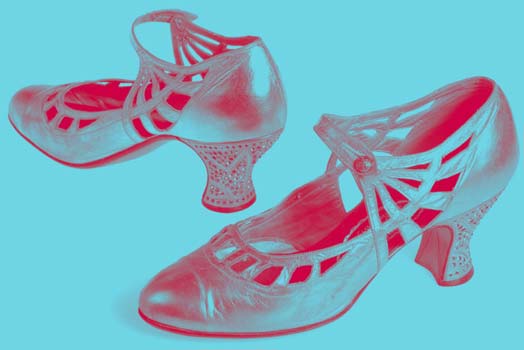
The full scope of Art Deco ranged from the sophisticated and the exotic to a playfulness verging on the kitsch, from satin and furs to highly polished wood and glossy black lacquer. Sumptuous yet streamlined, the style appeared to emerge as both a reaction and a continuation of Art Nouveau. It employed the same classical and natural motifs but reduced them to geometric stylisations; it discarded fussy ornamentation and pastels in favour of modern materials and bold colours. What unifies the Art Deco style is its use of sleek stylised form; pale backdrops highlighted by vibrant accent colours; simplicity of line; geometric patterns; gratifying abstract shapes and sweeping curves.

The Art Deco style had its first revival in the 1960s. In London it was particularly linked with the fashion and retail styles of the Biba stores in Kensington. Elements of the style have since been readdressed, reintroduced and revaluated. In architecture, buildings such as the MI6 headquarters replicate its distinctive symmetry and detail; Wedgwood continue to reproduce Clarice Cliff ceramic designs and a flourish of Art Deco fairs feed the style back into contemporary homes. Modernism, a more intellectual interpretation of design of the same period, has been the subject of much recent debate. Although focussing more on concepts of functionalism and economy, Modernism shares many of Art Deco’s stylistic tendencies.

The Museum of London Group is funded by the City of London and the Greater London Authority. Museum of London, London Wall, LONDON EC2Y 5HN, United Kingdom. Copyright Museum of London. Legal notices & Disclaimer. This site is maintained by the Museum Systems Team.