


Migration and Citizenship
The 20th century saw migration - both immigration and emigration - become more important to Britain than ever before. More people moved around the globe and as they did so, so too did the State's attempt to control who came in, monitor who went out and decide who was entitled to the rights due to a British citizen.
Alien's Act 1905
London was at the heart of all debates about migration and citizenship in the 20th century. The century began with the Aliens Act of 1905, Britain's first attempt to define some groups of immigrants as 'undesirable'. The Act sprang from a perceived crisis in London's East End, where overcrowding seemed to have got dramatically worse with the arrival of thousands of Russian and Polish Jews. The century ended with London at the centre of debates about asylum seekers, a category of migrant that the 1905 Act had specifically said 'shall not be refused (leave to land) on the grounds merely of want of means'.
Migration changes the face of London
Despite attempts to control the flow of people to and from the capital, the changes that migration wrought in the face and culture of Londoners over the century was profound. In the 1901 census 95.5% of Londoners were what would later be classed as 'White British' (66% were born in London, 26% born elsewhere in England or Wales, 1.3% in Scotland and 1.4% in Ireland). Of the remaining 4.5%, 0.9% were born in British Empire countries, and 3.6 % born in 'foreign countries'). These foreign countries were largely European, for centuries the main source of migrants to London. The figures in 1901 reflected the great movement of Jewish refugees across the continent that had begun thirty years earlier. The three largest groups of foreign born Londoners in 1901 were 39,117 Russians, 27,427 Germans and 15,429 Polish Russians.
One hundred years later, the Londoners of 2001 were a very different lot. The proportion of 'White British' Londoners had gone down to 72%. The three largest groups of Londoners with ethnic backgrounds other than white British were Indian (6%), Black African (5.2%) and Black Caribbean (4.7%). Because the figures were based on Greater London, rather than inner London these percentages represented larger numbers of people: the 6% of Indian Londoners represented 436,993 people. London by 2001 was unquestionably the most diverse city in Britain, proud of its multiculturalism and beginning to rely heavily on the economic advantage that such a population mix gave the capital.
London at the centre of change
The two driving factors in London's 20th century migration were: the greater mobility that air transport brought, and the aftermath of the British Empire. On both counts, London was bound to be at the centre of change. London, more than any other British city, had transport routes leading to it from all over the Empire. Emigration as well as immigration flowed naturally through the capital. In the first half of the 20th century about 50,000 people a year, left Britain to settle in Dominion countries, particularly Canada and Australia, and were encouraged to do so by government assisted passages or child emigration schemes. Until the 1980s Britain was a country of net emigration, with more people leaving than arriving.
Russian and European migration 1900 - 1939
Migration into London throughout the 20th century fell into three broad phases, each marked by a distinctive set of concerns. Until the second world war, the main migration concern was destitute Europeans and Russians, displaced by the Russian revolution, the first world war or, by the 1930s, Nazi persecution. By the mid-1920s it was estimated that Europe had 9.5 million refugees, of which at least 2 million were Russians. All European countries fell back on nationality as a way of controlling the movement of people and in Britain the climate produced the much harsher Aliens Act of 1919 and the first appearance of the British 'blue passport', which, it was said even the Foreign Secretary now had to carry.
As the 1920s progressed, fears about 'aliens' were compounded by Britain's first experience of mass unemployment. In July 1920 the London County Council banned foreigners from all council jobs. By the middle of the decade the Musician's Union began its hard line campaign for a ban on the American jazz musicians, largely black, who were filling the positions in West End club bands and hotel orchestras. The first world war had also dramatically altered the way in which London’s large German community was seen. The Royal family was not alone in anglicising their name during the war, changing their surname from 'Saxe Coburg' to 'Windsor'.
At this time citizens of the British Empire were not officially considered to be 'aliens' although citizens who happened to be black-skinned were often caught up in the climate of suspicion towards those who were obviously 'other'. It was not until the second half of the century that migration from Commonwealth and former Empire countries moved centre stage, in terms of legislation and debate.
The 'open door' - 1948-1961
The second phase of migration into London was the relatively 'open door' period between 1948 and 1961. It began with the 1948 British Nationality Act, in part a thank you to British commonwealth citizens for their war effort and in part a reflection of labour needs after the war. The act bestowed citizenship rights on people from Commonwealth countries, creating a kind of global British labour market, with people moving freely within the Commonwealth, just as people moved freely within the British Isles.
The Empire Windrush
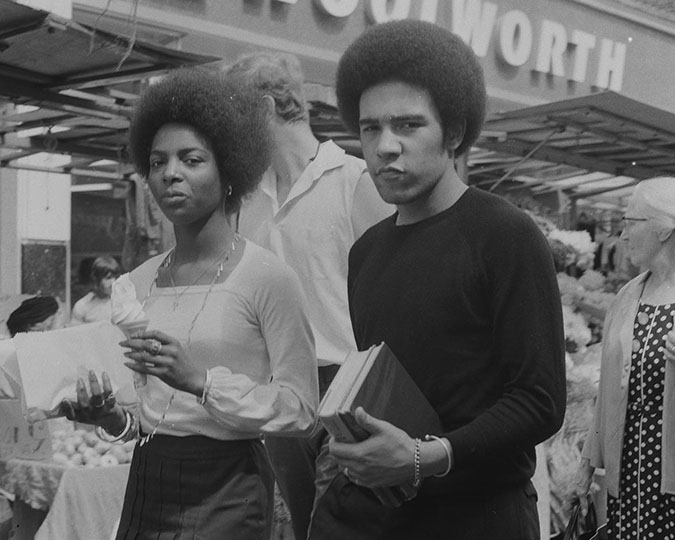
The opportunity to find work in Britain was taken up most enthusiastically in the Caribbean. The arrival of the ship Empire Windrush in June 1948, marked the beginning of a large movement of Caribbean people, initially workers but then families and dependents. By 1961 around 177,000 Caribbeans had arrived in Britain, of whom around 100,000 had settled in London, mainly working in transport and construction. Britain’s labour needs in the post-war period also meant recruitment among certain groups of non-Commonwealth citizens. Around 200,000 Polish former service-men and their dependents settled in Britain after the war, partly in recognition of the Poles' distinctive war effort, and partly the result of active recruitment.
Commonwealth Immigration Act, 1962
The third phase of 20th century migration begun with the Commonwealth Immigration Act of 1962 and was characterised by the increasing entanglememt of migration issues with race relations issues and the social problems caused by rising unemployment as Britain's industry collapsed. The 1962 act tightened controls by requiring all Commonwealth citizens seeking employment in Britain to have a work permit and employment voucher. Further acts in 1968 and 1971 further tightened controls. The 1971 Act meant that Commonwealth citizens in effect lost their privileged status. Those who wanted to enter Britain were henceforth treated no differently from foreign nationals. However the same act also began the process of relaxing work-permit controls on nationals from countries within the European Union, which Britain joined in 1973.
During this third phase of tighter migration controls, significant exceptions were made as new groups of refugees emerged. Between 1968 and 1972 50,000 East African Asians arrived in Britain, expelled from Uganda and Kenya by the action of dictators. People displaced by the Bangladeshi war of independence in 1972 and the war in Vietnam were also given leave to settle and many chose to do so in London. As the focus turned to refugees and asylum seekers, the question of Commonwealth migration faded but in the 1990s the status of the Hong Kong Chinese again raised the question of whether all categories of British Citizenship gave automatic rights of settlement. The answer was no.
Migration drives forward London's cultural and economic life
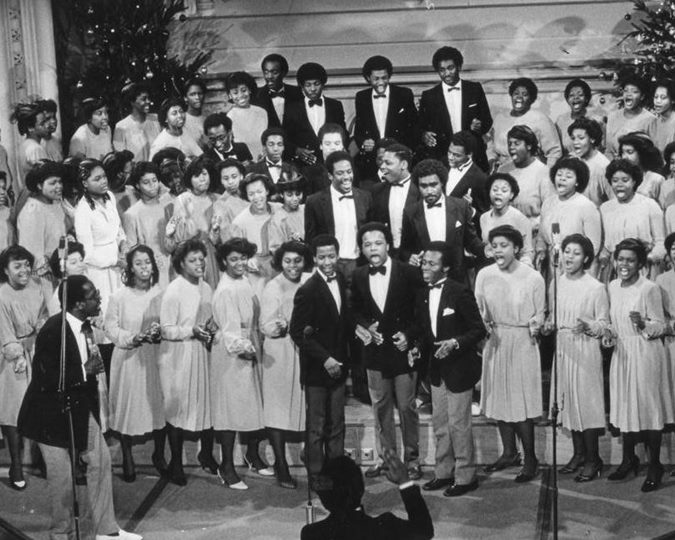
If migration at the end of the 20th century was infinitely more complex than it had been at the beginning of the century, it was also coming to be more understood as a vital driver of the economy and culture. Just as London had been the chief beneficiary of the British Empire in the 19th century, so London was the chief beneficiary of migration into Britain in the 20th century, reaping a rich harvest of entrepreneurial and cultural vigour.
|