Skip to search form

Related subjects:

Pakistani London

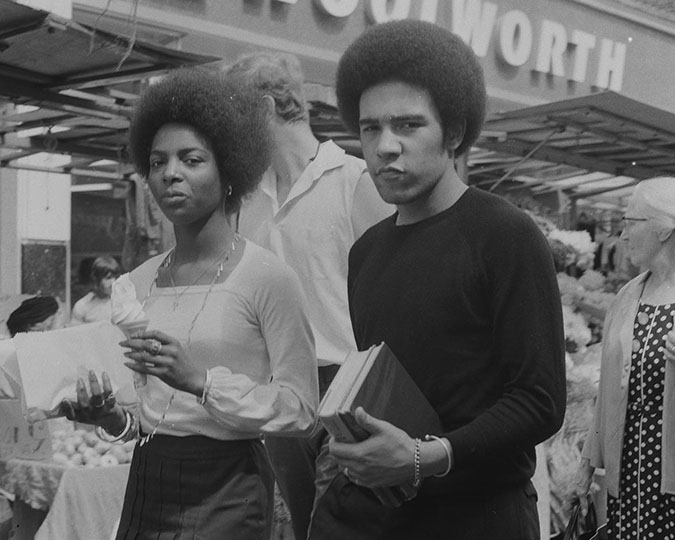
Pakistan was created as a Muslim state in 1947 and the upheaval caused by its separation from India motivated some Pakistani men to seek a new life in London.

Largely from rural backgrounds, these men filled jobs as unskilled labourers and were later joined by their families. Some set up their own businesses, such as grocery stores or taxi firms, often assisted by family members.

Ilford and Leyton in east London are now home to thriving Pakistani communities.

London is home to nearly 143,000 people of Pakistani origin and they have made a vital contribution to the capital’s economic and cultural life. For example, Pakistani people owned 0.6 per cent of businesses in London in 2001 and 20 per cent of Pakistani men are now in managerial roles.

Ken Livingstone, Mayor of London, 21 September 2004 http://www.london.gov.uk/

When India gained independence in 1947, Jinnah, leader of the Muslim League, argued for an independent Muslim state for the Muslim majority areas of north west and north east India. India was partitioned as these regions became Pakistan.

This caused major upheaval with huge numbers of people moving between the three zones. It created a multitude of displaced people, put pressure on the economy and emphasised existing land shortages.

Pakistani men arrived in Britain from Mirpur in the west and Sylhet in the east (Sylhet later became part of Bangladesh). Many of their families had worked in the British army or on British Merchant Navy ships.

The building of the Mangla Dam in Mirpur in the late 1950s destroyed hundreds of villages and stimulated another wave of migration.

The majority of Pakistani migrants to the UK were from rural backgrounds and they initially found work in textile factories in the Midlands and North.

The National Health Service recruited for doctors in Pakistan from the early 1960s. Over 7,000 Pakistani doctors currently work for the NHS.

Those that settled in London also took on unskilled jobs, which allowed them to send home money to their families. Like other South Asians, considerable numbers of Pakistanis set up their own businesses, often employing family members.

Most of these migrants hoped to return home when they had made enough money to ensure their families’ prosperity.

However, when the British government threatened to restrict immigration in 1962, many decided to stay and were joined by their wives and children.

Today one-fifth of Pakistani Londoners are self-employed. Some own grocery stores or newsagents which open long hours. Pakistani Londoners are most likely to be found working in the wholesale, retail and repair industries.

The recent census counted over 142,000 Pakistanis in London, most of whom are Muslim and speakers of Urdu. Newham, Redbridge and Waltham Forest are home to the largest Pakistani communities in the city.

The Pakistani London population is young in age compared to other ethnic groups. Many of its number are students and Pakistani men are better qualified than the average Londoner, although Pakistani women have fewer educational qualifications.

Well-known Londoners with Pakistani roots include Anwar Pervez, whose Earl’s Court grocery store expanded into the Bestway chain of shops, and the playwright and author Hanif Kureishi, son of a Pakistani father and an English mother.

Bibliography

Links

The Museum of London Group is funded by the City of London and the Greater London Authority. Museum of London, London Wall, LONDON EC2Y 5HN, United Kingdom. Copyright Museum of London. Legal notices & Disclaimer. This site is maintained by the Museum Systems Team.