


Prehistoric
The Museum's prehistoric collections may be divided into three categories: Firstly there are single artefacts of pottery, bone and stone that were recovered during dredging operations in the Thames in the 19th and early 20th centuries.
Secondly there are Palaeolithic implements recovered during gravel extraction in west London or during building operations in other areas.
Thirdly there are collections of pottery, bone and stone recovered on land either during building operations or by surface collection in less densely developed areas such as Ham Fields or Wimbledon Common
The most important element of the prehistoric material is the collection of some 900 pieces of Bronze Age and Iron Age metalwork, mostly recovered from the Thames. It is one of the largest such collections in the country and has been extensively discussed and published both nationally and internationally.
The major holding within this group is derived from Thomas Layton and includes two unparalleled items from Brentford, a copper alloy chariot fitting or 'horn cap' which is a superb example of the Celtic art style, and a wooden stave-built tankard sheathed in bronze.
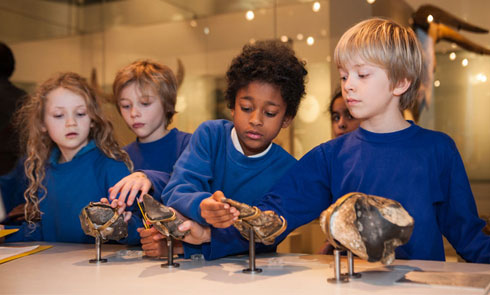
The largest category of prehistoric material (comprising some two thirds of the total collection of c.11,000 artefacts) consists of flint and stone implements. Within this, the largest group is the Lower Palaeolithic material, principally handaxes recovered during gravel extraction and building operations.
The Garraway Rice collection, donated in 1937, comprises material from the Yiewsley area in west London, and has been published. For the Middle Palaeolithic, the Yiewsley material again provides limited but crucial evidence, as does material from sites in the Acton area such as Creffield Road.
The Upper Palaeolithic is not well represented, though recent excavations have begun to redress the balance. Mesolithic axes and picks are numerous, and have even given their name to a type, the 'Thames pick', so-called because of the numbers recovered during river dredging.
The collection of Neolithic axes is one of the largest in Britain and, like the metalwork, seems to represent primarily votive offerings deposited into the river. Many of the axes made of stone other than flint have undergone thin section analysis as part of a programme by the Implement Petrology Research Group.
The collections of prehistoric bone, antler and horn, of pottery and of coins, are relatively small and less significant that the other categories, although some of the antler material, particularly the mace heads and mattocks, have recently been subject to a radiocarbon dating programme, which has divided them into Mesolithic and Bronze Age dates.